 |
||||||||||||
The Addo Elephant National Park, place of the Big 7Tucked away in the dense valley-bushveld of the Eastern Cape lies the Addo Elephant National Park, Third largest of South Africa’s national parks.
The diversity of Addo Elephant Park's landscapes ranges from dense bushveld and shrubs to a wide range of trees including large numbers of "Spekboom" trees and rocky areas. Birding opportunities are excellent in the Park, with a large variety of species. The primary wildlife area contains a number of 170 bird species, whereas the expanded park could have as many as 450 species in a variety of environments. The Park is situated in a region that has been associated with its elephants since time immemorial, long before any settlers arrived to start their farming activities. The elephants are to the Addo National Park what the polar bears are to the Arctic. Without them, Addo Park would not be Addo Park. Learn more about the Addo Elephant National Park:
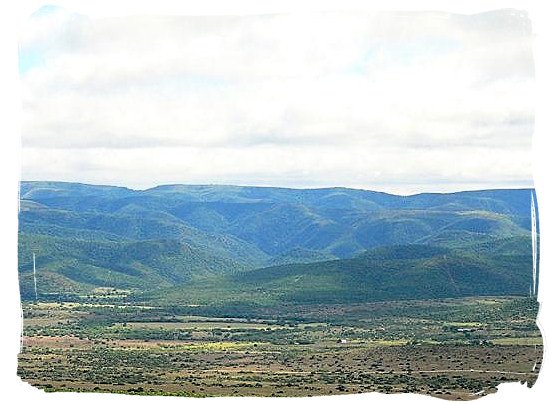 Landscape in the Addo Elephant National Park - South Africa national parks General info,... During the 1700s and 1800s the great herds of Elephants had been all but decimated by hunters. When the first settler farmers began to colonize the area, they saw the remaining Elephant population frequently devastating their fields and crops. Immediately they started to eliminate what was left of the large herds. As a result the number of Elephants kept on decreasing, until eventually there were barely a any of them left To protect the remaining number of 11 "Addo" Elephants as they were called, the Addo National Park was proclaimed in 1931. Presently this delicately balanced environment is safe haven to over 450 Elephants in addition to Black Rhino, Cape Buffalo, many different antelope species and also the extraordinary flightless Dung Beetle which is to be found virtually exclusively in the Addo National Park. It is the only national park in South Africa where you can find the "Big Seven" (Lion, Rhino, Leopard, Buffalo, Elephant, Shark and Whale) in their natural environment. 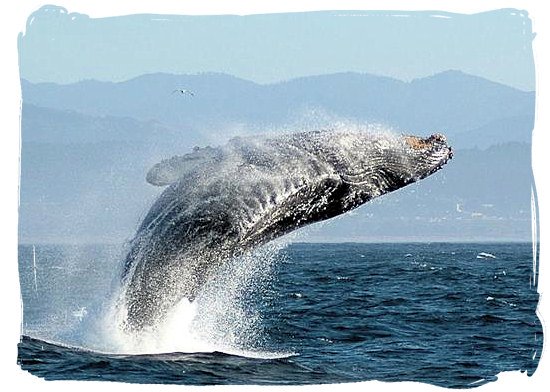 Humpback Whale breaching - The Addo Elephant National Park, South Africa national parks Some of the unique features of Addo National Park include;
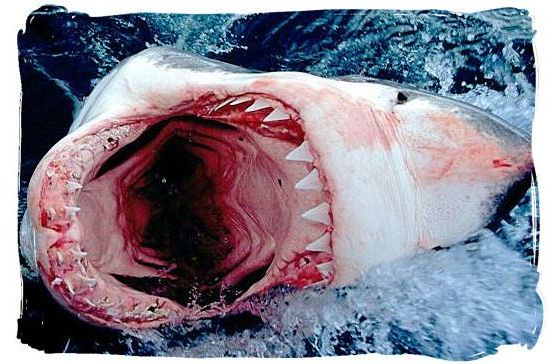 The cavernous mouth of a great white shark - The Addo Elephant National Park, South Africa national parks Photograph by Herman Yung Top of Page |
    |
|||||||||||
|
|
||||||||||||