 |
||||||||||||||||||
The Magic of the Cape Malay cuisine |
||||||||||||||||||
| SOSATIES | YELLOW RICE |
| BOBOTIE | FRIED FRUIT AND VENISON STEWS |
| CAPE MALAY CURRIES | WATERBLOMMETJIE BREDIE |
| DENNINGVLEIS (DENNING MEAT) |
| SOSATIES | |
| YELLOW RICE | |
| BOBOTIE | |
| FRIED FRUIT AND VENISON STEWS | |
| CAPE MALAY CURRIES | |
| WATERBLOMMETJIE BREDIE | |
| DENNINGVLEIS (DENNING MEAT) |
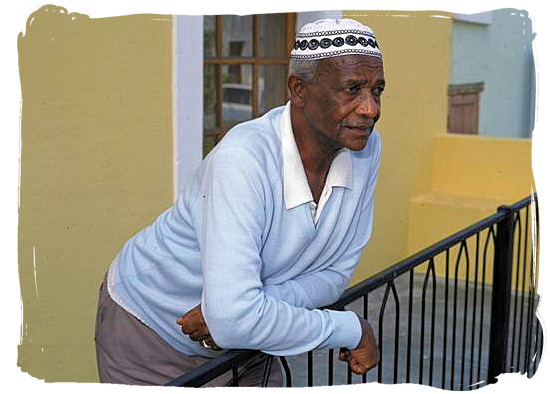
A true to type descendent of the Cape Malay slaves imported by the Dutch into the Cape Colony in the 17th century
copyright © South African tourism
The magic of the Cape Malay cuisine in South Africa is the delicate use of exciting mixtures of spices and the use of fruit cooked with meat, marrying sweet and savoury flavours, with hints of spice, curry and other seasonings.
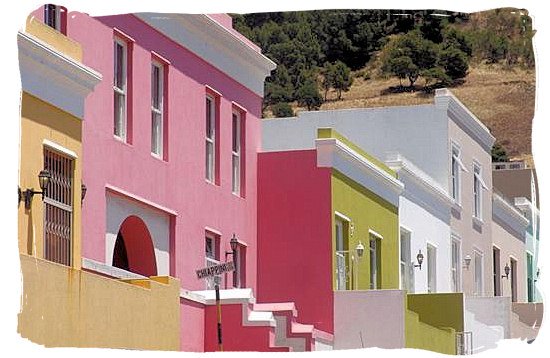
Typical Cape Malay houses in the "Bo Kaap" (Cape Malay quarter) in Cape Town - Cape Malay cuisine
The settlers in the cape colony made most of them work in their households and because many of them were experienced cooks, they soon were in charge of the family kitchen, introducing their own traditional cuisine.
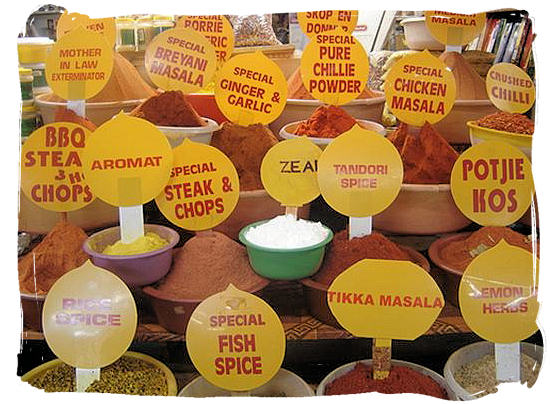
Cape Malay magic of fragrant herbs and spices - Cape Malay cuisine
They became very creative in adapting the local dishes with their own ingredients, using complex herb and spice mixtures with sweet and sour sauces turn the simple settler stews into delicious bredies.
<<< Top of Page
Bobotie,...
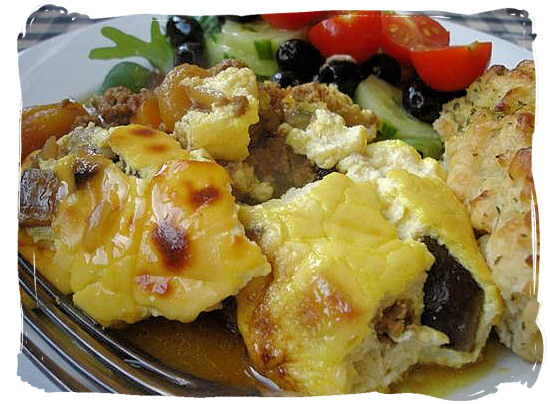
Bobotie, an internationally renown Cape Malay dish - Cape Malay cuisine
One of the most famous delicacies from the Cape Malay kitchen is "Bobotie". Traditionally this was a "Monday" dish, made from the leftovers of Sunday’s cooking. The "Bobotie" recipe knows hundreds of variants. An essential ingredient is "begrafnisrys" (funeral rice), rice with turmeric and raisins, so called because it was often served as a funeral meal by the Cape Malayans.
Although introduced by the Cape malays, Bobotie has become highly popular in South Africa and is virtually being regarded as an indigenous dish. A littler soaked bread is mixed with minced meat, preferably lamb and flavoured with a mixture of fried onions, curry, apricot jam, fried almond shavings and sultanas. The addition of lemon leaves ( or alternatively lemon juice) gives bobotie its distinctive aroma. Halfway the cooking it is covered with a topping of egg custard to give it its attractive golden crust on top.
<<< Top of Page
Sosaties,...
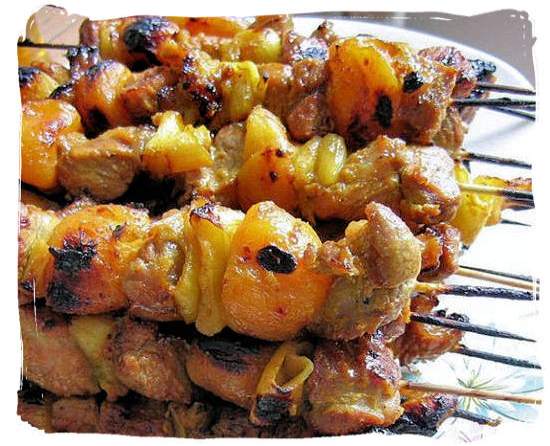
Sosaties, another top hit from the Cape Malay kitchen
A good example of the Malay influence on South Africa’s cuisine. The word sosatie comes from the Indonesian words "sesate" (skewered meat) and "sate" (spicy sauce). They are made with small pieces of lamb threaded on thin wooden skewers, with small cubes of bacon in between. Un like kebabs, "sosaties" are marinated in a curry marinade for up to two days. A popular delicacy at most South African "braais" (barbecues).
<<< Top of Page
Waterblommetjie bredie,...
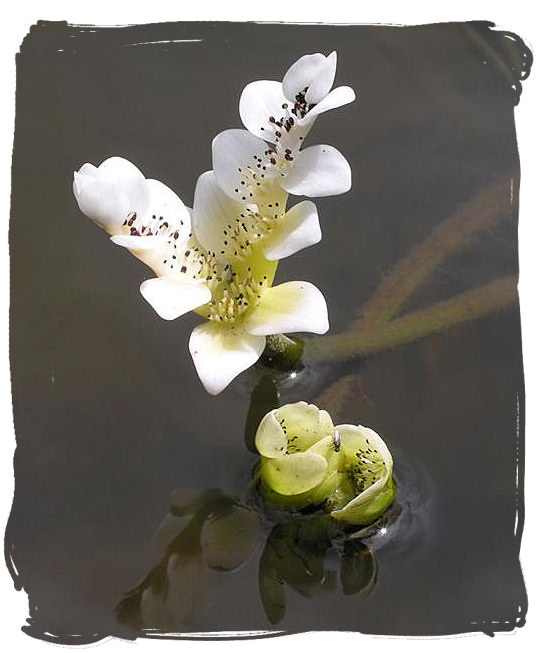
South Africa’s famous "Waterblommetjie" (water lilly) - Cape Malay cuisine
A famous and unique South African culinary experience. “Waterblommetjies” are found in shallow dams and glens of the Boland region in the Cape from about May to November. With typical Malay creativity it is combined with the slightly tangy taste of sorrel and the full-bodied flavour of mutton into a delicious stew with a fine balance between salt, savoury and somewhat sour tastes.
<<< Top of Page
Yellow rice,...
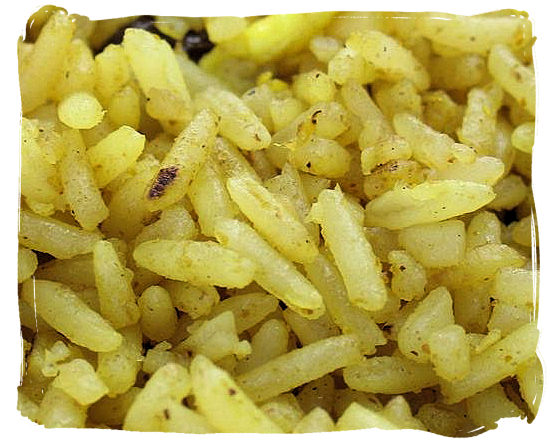
Tasty yellow rice - Cape Malay cuisine
Very tasty with the lovely smell of cinnamon sticks, turmeric and crushed cardamom pods. served with their rich curries, yellow rice is further enhanced with raisins and fried almond shavings.
Fried fruit and venison stews,...
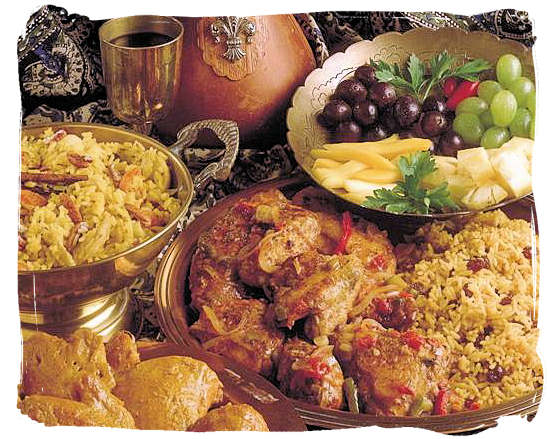
Typical Cape Malay dishes - Cape Malay cuisine
Another taste happening from the cape loved by many. The finely balanced sweet-sour taste of the fruit complements and mellows the flavour of the meat to make it a delicate whole.
<<< Top of Page
Cape Malay curries,...
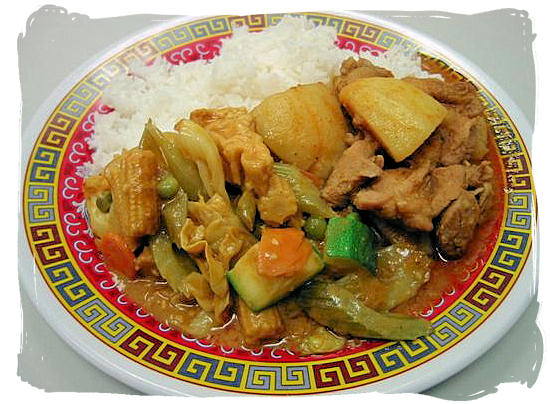
Curry and Rice, a highly popular, almost indigenous dish in South Africa - Cape Malay cuisine
Served with a variety of sambals and atjars, Cape Malay curries are famous for their full-bodied flavour. Making a colourful display of all kinds of local vegetables, meat and fish, they are not as hot as the curries used in the Indian kitchen.
<<< Top of Page
Denningvleis (denning meat),...
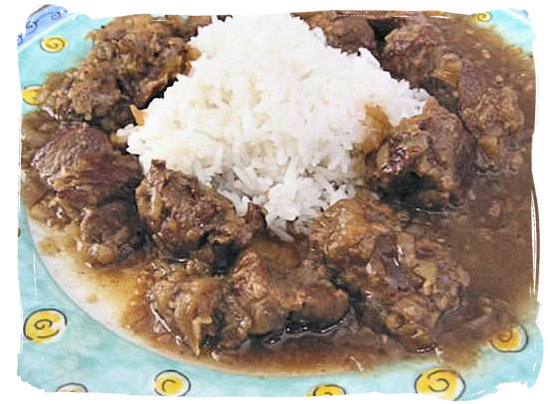
"Denningvleis" (Denning meat), a delicious Cape malay speciality - Cape Malay cuisine
A hearty meat stew flavoured with bay leaves and tamarind or lemon juice with an exciting sweet-sour flavour. The word Denning originated from the Javanese "dendeng", the meat of the water buffalo. Nowadays however, cooks mostly use mutton.
Top of Page