-
You are here:
Home
›
-
Food in South Africa
Delicious food in South Africa,
enjoy the tantalizing flavours of South African food
Enjoy the fascinating variety of delectable food in
South Africa, from the deliciously diverse flavours of South Africa’s “rainbow cuisine” to culinary
specialities from all over the world.
With its rainbow of cultures, the South African food scene offers a fascinating variety of delicious
dishes.
It all comes together in a blend of tantalizing European cuisine, the sweet-sour tastes of the
Malays and the spicy curries from India alongside the indigenous cooking of the African people.
Because of its complex diversity it is difficult to identify the typical south African kitchen
or cuisine.
At the same time one can say that precisely that diversity together with the exotic are in
fact the elementswhich are typical for the South African cuisine.
All in all a true reflection of the country's rainbow culture with something for everyone.
Use the menu below to find out more,...
What to expect,...
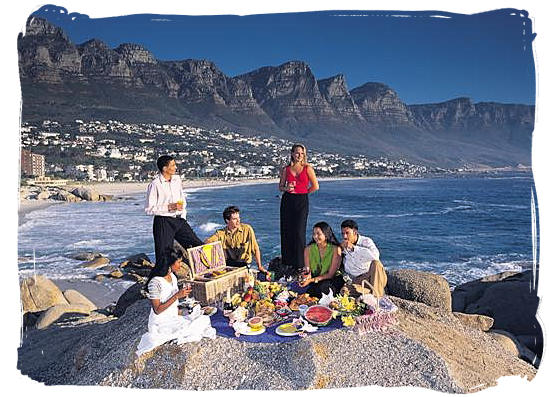
Picnic on the rocks at Camps Bay, Cape Town
copyright © South African tourism - Delicious food in South Africa, South African food guide
Eating and drinking in South Africa is a culinary experience not to be missed. The wide array of
cuisine available is overwhelming. From the deliciously diverse flavours of South Africa’s
indigenous andmulti-cultural rainbow cuisine to culinary specialities from all over the world.
One thing is certain, you get value for money. Whether you visit a five star restaurant or just a
shebeen in a township, you will find that the food in South Africa costs much less then what it
would abroad.
Brief historical perspective,...
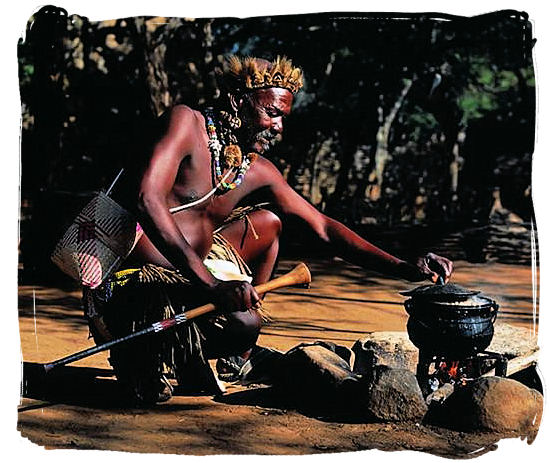
Zulu warrior cooking “potjie”, food like in the old days
copyright © South African tourism - Delicious food in South Africa, South African food guide
Man’s need for fresh food was once the main reason for the colonization of South Africa, when in 1652 the
Cape was used as a refreshment station for passing VOC sailing ships on their arduous journey around the
Cape of good Hope.
The early settlers in the Cape were producing a variety of European vegetables and fruit. Most of their
cooking was done the Dutch way, in a pot over an open fire. That pot (“potjie” in Afrikaans) is still part of
South Africa’s culinary tradition today.
Over the years other cultures like the Malay slaves, the French Huguenots, the Indians the British and many
others from all over the world, have been introducing and adding their culinary preferences.
Traditional African cooking,...
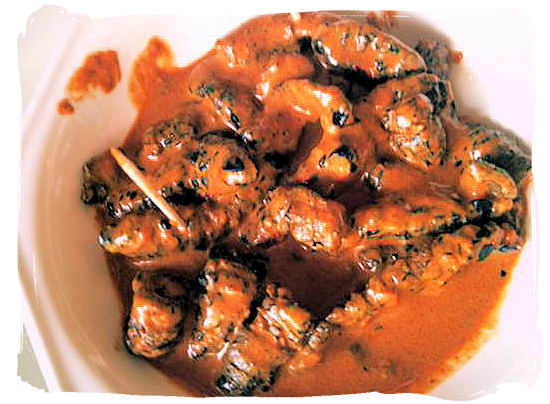
Mashonzha, cooked Mopani worms in a peri-peri sauce, is an indigenous African delicacy
Delicious Food in South Africa, South African Food Guide
The authentic African kitchen is focused on maize meal porridge, meat and sauce. The sauce is made from a
variety of savouries (shebu) and vegetables and flavoured with chilli. Maize meal porridge is the staple
food of almost the whole of the African continent.
Umngqusho is said to be Mr. Nelson Mandela’s favourite dish. It is made with "stampmielies" (broken
dried maize kernels), sugar beans, butter, onions, potatoes, chillis and lemons, which are allowed to simmer
for a long time until all ingredients are tender.
Afrikaner cuisine,...
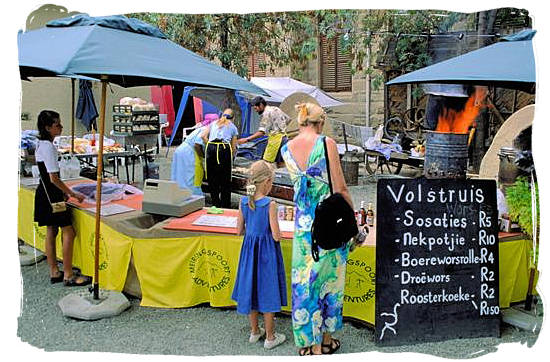
Food stall at the "Klein Karoo" arts festival in Oudtshoorn
Delicious food in South Africa, South African food guide
"Afrikaners" are mostly descendents from the original Dutch, French and German settlers, who founded the
Cape colony in the 17th century. The cuisine that stands out as typical "Afrikaner", is to a large extend
based on the Dutch settlers cuisine, with contributions of the French and German settlers. Add to that a
large portion of Malay cooking and temper it all by years of migrating on the Great Trek.
And so we inherited today’s fabulous legacy of "Potjiekos" (potfood), "Braais" (barbecues), "biltong" (spicy
dried meat) and "Boerewors" (farmers sausage). Hunting was the order of the day on the Great Trek, to keep
the cooking pot filled with meat. Today amongst the "Afrikaners" hunting is still regarded as a must to
provide the venison for their delicious game dishes.
South African braai (barbecue),...
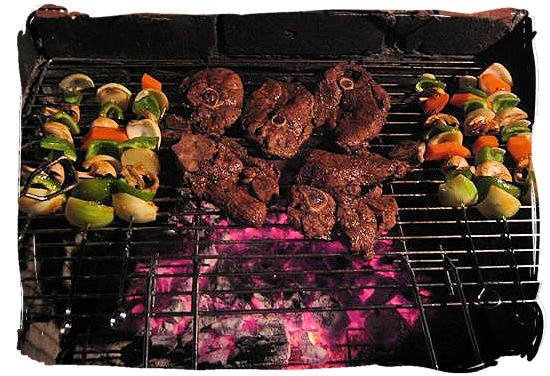
The South African “braai” (barbecue) is a way of life and a culinary experience unequalled in the world
Delicious food in South Africa - South African food guide
Then there is of course our south African barbecue or "braai" as we call it. In south Africa it’s an integral
part of our rainbow culture a common element in its cultural diversity, a way of life almost like a national
sport. A must for everybody, young or old, poor or wealthy, white or black.
People barbecue weekly, sometimes daily at their homes in their gardens, on campings when on holiday, or any
suitable spot in the great outdoors. They “braai” on anything, from state of the art barbecue units to a
piece of mesh wire on a few bricks or stones.
The taste and smell of marinated steaks, seasoned pork and lamb chops, spicy spare ribs and kebabs served
with “mielie pap” (maize meal porridge), sauce, mushrooms, herbed bread and delicious salads at a South
African barbecue, is a culinary experience unequalled in the world.
The Indian kitchen,...
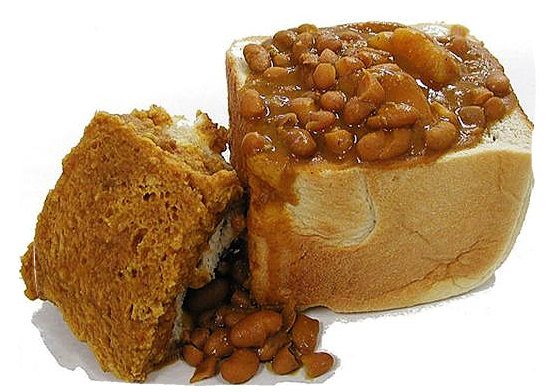
The bunny chow, a hollowed out half loaf of bread filled with curry, a typical Indian-South African dish
Delicious food in South Africa, South African food guide
During British rule in South Africa in the 1900’s, labourers were brought out from India to South Africa to
work in the sugarcane fields of KwaZulu-Natal. Sticking to their traditions, they took much trouble to
preserve their culinary heritage. Indian cookery grew very popular in South Africa over the decades that
followed.
Today we reap the fruits with a large variety of curries, atjars, samoosas, biryani and Tandoori dishes, to
name but a few. A delight to the South African palate. Both coming from the Far East, there are some
similarities between Malay and Indian cooking. Amongst others, the unleavened bread roti for instance is
common to both and so are samoosas. The Malay briyani and the Indian biryani are both festival dishes,
based on rice.
The Malay kitchen,...
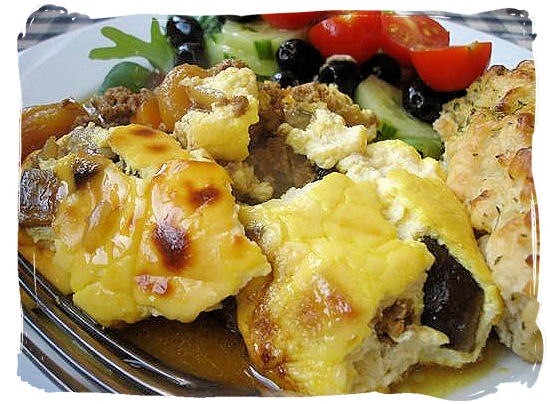
Bobotie, a delicious Cape Malay dish with its origins in the 17th century
Delicious food in South Africa, South African food guide
The Dutch cooking customs in the early days of the Cape colony were changed forever with the arrival of the
slaves from the Far East. Malay slaves began to arrive at the Cape towards the end of the 17th century.
Among the man were skilled fishermen, and the women were expert cooks who included a multitude of spices in
their dishes.
They brought aniseed, star fennel, turmeric, cardamom and ginger (both green and dried) amongst others. They
brought a variety of massalas, mixtures of different spices used for different dishes, common to the Indonesian
culinary culture and they brought saltpetre, the miracle ingredient for pickling.
The intermingling of the early Dutch and Malay cookery is known today as the Cape Dutch cuisine, a fragrant
style of cooking which is unique to South Africa.
The Portuguese kitchen,...
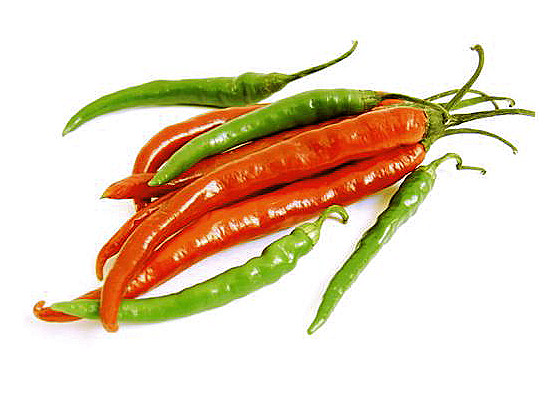
Chilli peppers, the key element of the Portuguese contribution to the South African cuisine
Delicious food in South Africa, South African food guide
Because of the proximity of former Portuguese colonies Mozambique and Angola to South Africa, Portuguese
cuisine made considerable impact in the South African kitchen, predominantly through the use of hot and
spicy chilli-based “peri-peri” seasoning, next to garlic, onions, bay leaves, fresh coriander, paprika and
red sweet peppers. They all go extremely well with “braais” (barbecues).
Grilled peri-peri chicken has become a national institution. Chouriço, prego rolls, chicken livers, giblets
and seafood are prepared as only the Portuguese can. Portuguese South African cooking is particularly known
for its mouth watering seafood dishes, such as prawns, calamari, cod, bacalhou, crab amongst others,
prepared in a multitude of ways.
Sensational seafood,...

Spiny rock lobster called crayfish in South Africa, a sensational delicacy fresh from the sea - food in South Africa
copyright © South African tourism - Delicious food in South Africa, South African food guide
From the Mozambique border in the East right around to the Namibian border in the west, South Africa's
coastline is rich in seafood such as kingklip, snoek (sea-pike), red roman, hake, cod, sole and pilchards to name
but a few. Other delicacies from the sea include "perlemoen" (abalone), oysters, mussels, calamari, shrimps and
spiny rock lobster called crayfish in South Africa.
As with meat, the "braai" (barbecue) is a favourite way of cooking fish. The people at South Africa's west
coast, known for their fondness of "snoek" and crayfish, are particularly adept at grilling seafood over an
open fire. In coastal areas fresh line-fish (catch of the day) is always a good menu option if you are a
fish lover.
"Potjiekos" (pot food),...
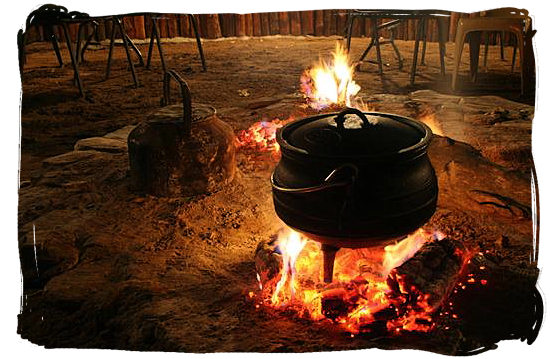 Cooking "potjiekos" (pot food) over an open fire, highly popular with all South Africa cultures
Delicious food in South Africa, South African food guide
Like the traditional "braai" (barbecue), "Potjiekos" (pot food) and Biltong are very much a shared taste
between all South Africa’s cultures. Right through the country’s history, from the days of the Khoi and the
San and the days of the southward Bantu migration to the days of the Great Trek and the Anglo / Boer wars,
people were constantly on the move.
Next to grilling, they used to cook meat together with all kinds of vegetables, herbs and spices in one go
in clay and later cast-iron pots over open fires. So has the three-legged cast iron pot become an
indispensable item in virtually every household, in which to cook delicious meals called "Potjiekos"
(pot-food).
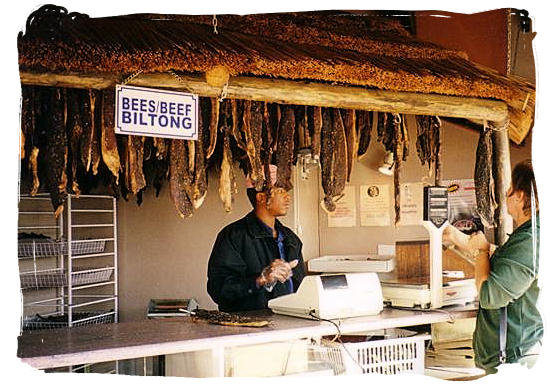 Biltong, cured and dried meat, a favourite snack with all South Africans
Delicious food in South Africa, South African food guide
The surplus meat was preserved by means of curing and drying. Today this cured and dried meat is known as
Biltong, a famous and popular snack in South Africa, as popular as chips are in the rest of the world.
Top of Page
-
Home
›
-
Food in South Africa