Join us on a brief tour past the milestones in the history of South Africa
Explore the fascinating and extraordinary history of
South Africa, from its earliest inhabitants to the post apartheid era. Characterized by violence,
racial differences and diversity, South Africa's history is inseparably entwined with the history
of the African continent. A history of Slavery, colonization and exploitation.
A history marked by a continent wide migration of large masses of people, the
upcoming of complex societies and the influx of large numbers of immigrants, that is a tribute to
the people who dealt with its challenges with enthusiasm and courage.
A history of the way of life of the original inhabitants whose livelihood
depended on hunting, gathering and the herding of domesticated animals, being transformed by the
discovery of iron.
The subsequent vast development in terms of technology and culture together with
the influx of and coexistence with other nations and races, culminating in the rise and fall of
Apartheid.
Use the menu below to explore the major
events in South Africa's history
This video will give you a short visual overview
of the history of South Africa.
Historical background African Continent,...
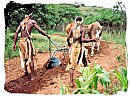
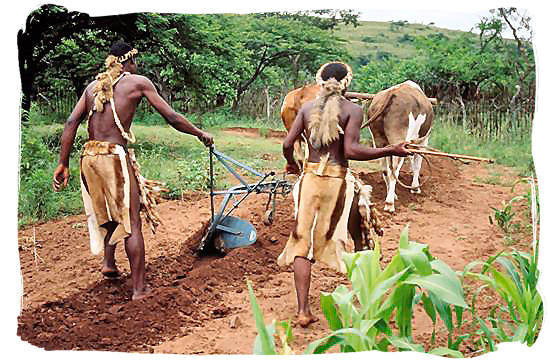
Agriculture developed rapidly with the introduction of iron and its various
uses, changing the landscape of African culture forever. Population growth accelerated and
consequently the search for more land and living space. Slowly but surely a pattern of migration
started to evolve, a pattern that eventually would develop into what is known as the Southern
Migration in Africa.
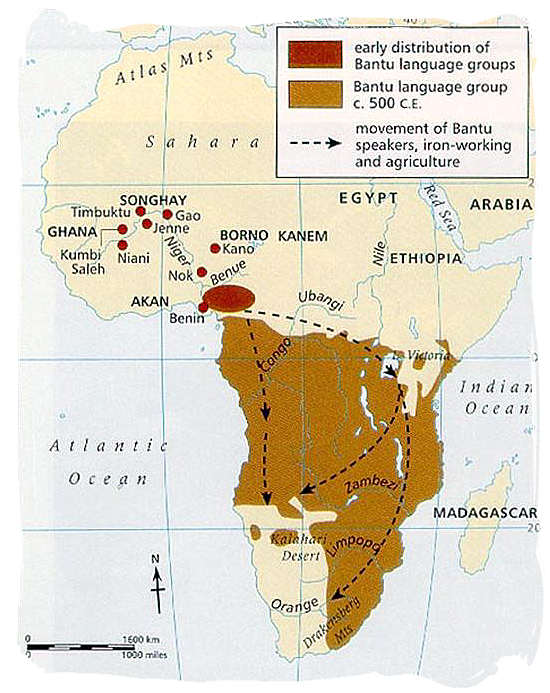
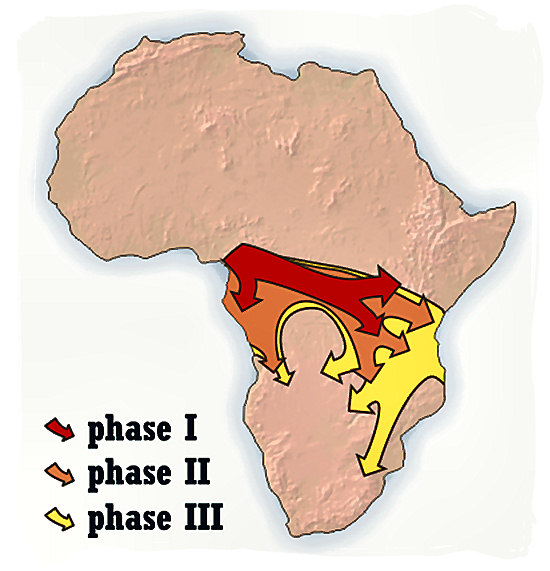
This mass migration of African (Bantu) people from the Great lakes from central
Africa into the Southern Africa region started around the 13th century and continued until
the 18th and 19th centuries. By that time they had settled themselves across the whole of South
Africa, except for the Dutch Cape Colony region.
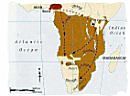
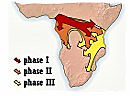
Map showing origination and southward migration of the black people in Southern Africa
Prehistoric times,...
It is hard to determine the beginning of man's existence in South Africa. It is
widely believed however, that it could be as far back as 2.3 million years ago when the genus Homo
came into existence, or even five million years ago with the development of Hominidae (human race).
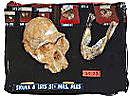
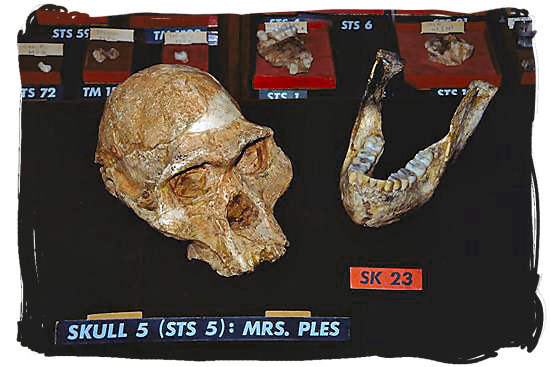
Archaeological evidence exists which indicates that Homo habilis and Homo
erectus were both inhabitants of the region of southern Africa millions of years ago. Research has
also shown that modern humans have been living in South Africa for at least the last 100,000
years.
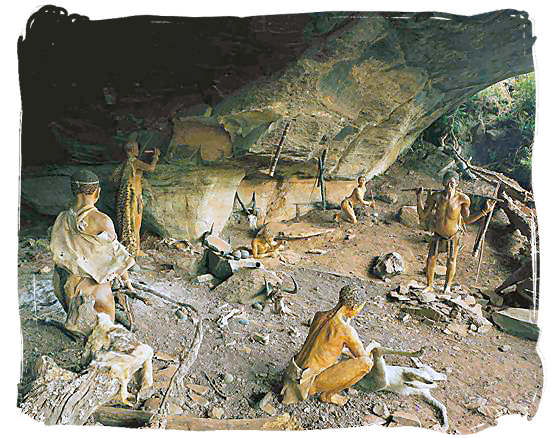
The San and the Khoikhoi people were the original inhabitants of South Africa.
The San people are also known as Bushmen, while the Khoikhoi are often referred to as Hottentots.
Even though their cultures differ significantly, together they are called the Khoisan people
because of their biological similarities.
It is believed that they originated from the same gene pool as the black people,
but to have developed separately due to geographical separation and other circumstances. In present
day's Southern Africa they have almost become extinct with only a tiny number of descendants left,
living in remote areas of the kalahari Namib deserts.
With the development of iron tools and implements, sowing, crop-growing and
reaping became a whole lot easier. As a result agriculture became one of the supporting pillars of
life and survival. This resulted in a chain reaction of increased prosperity, growing population
and shortage of land.
In their quest for more living space the African people started expanding their
territories by a process of migration into the open spaced and very thinly populated regions of
Southern Africa. Anthropologists believe that this process, called the southern migration, took
place in three phases over a period of hundreds of years.
Settlement of the black people in South Africa,...
The Southern Migration resulted in large populations of black people settling
themselves in KwaZulu-Natal, Mpumalanga and all along the Southern coast of South Africa as well as
in the interior.
Apart from some linguistic similarities, the diversity and dissimilarity between
them in terms of culture is such, that today they are recognized as different ethnic groups.
Some of the main ethnic groups of black people emanating from the southern
migration include the Nguni and Sotho speaking people, as well as the smaller Venda, Shangaan and
Tsonga tribes.
This map shows the three phases of the Southern Migration of people from central to southern Africa
Arrival of the first European discoverers,...
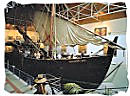
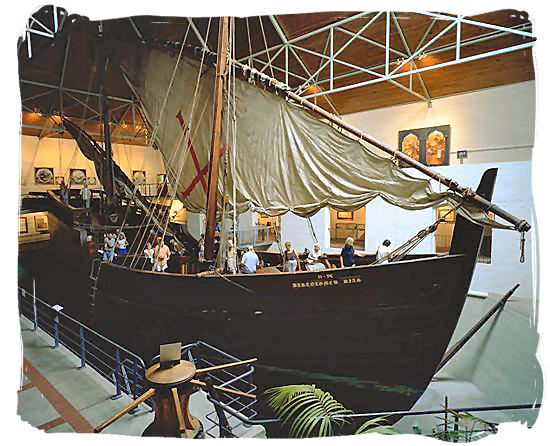
The first Europeans to set foot on South African soil were Bartholomeu Dias, a
Portuguese seafarer and his crew who sailed around the southern tip of Africa in 1486. He gave it
the name "Cabo de Boa Esperanca", Portuguese for Cape of Good Hope. This happened well after the
first black tribes started moving into the country around the 12th and 13th centuries.
Nine years later fellow Portuguese seafarer Vasco da Gama made the same
voyage around the Cape on his way to India. Although the Portuguese were the first Europeans to
travel around the Cape, they had no intention of establishing a settlement. Their interests were
more focused on India and Asia.
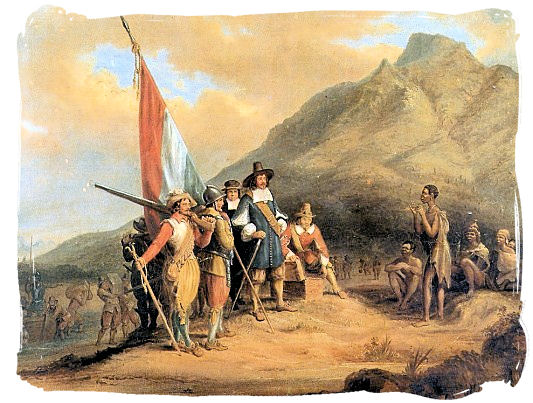
A century and a half had gone by since the visit of Vasco da Gama, when Dutch
explorer Jan van Riebeeck arrived in Table Bay with his small fleet of 3 ships on the 6th of April
1652. He was tasked with setting up a supply station for the Dutch East India Company (V.O.C.).
Initially the V.O.C. had no intention of colonizing the Cape. They changed
their mind however, when granting nine company servants their freedom in 1657 together with
dispensation to set up private farms in the Rondebosch region at the foot of Table Mountain.
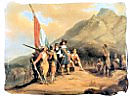
The first Europeans to settle in South Africa, Dutch seafarer Jan van Riebeeck and his crew, meeting the local inhabitants in the Cape, the Khoisan people
The arrival of Slaves in the Cape Colony,...
Slaves were brought to the Cape from Madagascar, East Asia, India and the rest
of Africa, causing a population boom in the Cape Colony.
Although they were primarily employed as servants and laborers, many of them
possessed valuable skills like bricklaying and carpentry.
These skills were instrumental in speeding up development and progress in the
colony. The intermingling of Europeans and slaves in that period marks the cradle of origin of the
colored community in the Cape and South Africa.
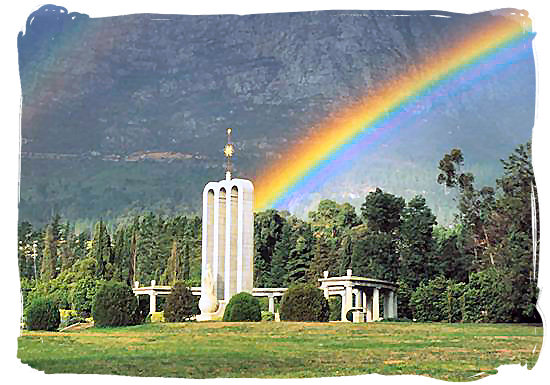
As a result of the banning of Calvinism in France in 1689 by Louis XIV, some
180 Huguenot emigrated to the Cape, where they settled in the "Olifantshoek Vallei" (today's
Franschhoek valley) in the Cape.
The origins of South Africa's famous and richly diverse wine culture can be
traced back to these French settlers who passed on their knowledge and love of fine wine to their
descendants.
Other European settlers from Scandinavia, Germany, Switzerland and Flanders
also made unique contributions to the diversity of the Cape population.
In 1795 the Netherlands were conquered by the post-revolution Republic of France
and was renamed the Batavian Republic. Prince William of Orange, Head of State of the Netherlands
at the time, sought refuge in England.
The prince appealed to the British to prevent the French from taking over the
Cape Colony. The British were happy to oblige and this resulted in the British take-over of the
Cape, a situation many people of the Cape were not happy with.
Unemployment was rife in Britain after the Napoleonic wars. To alleviate the
problem, Lord Somerset tried to entice people to emigrate to the Cape Colony.
By getting them to settle in the eastern part of the Cape, he believed that
they could also be helpful in maintaining order and peace with the Xhosa people along the border
between the Sundays river and the Fish river.
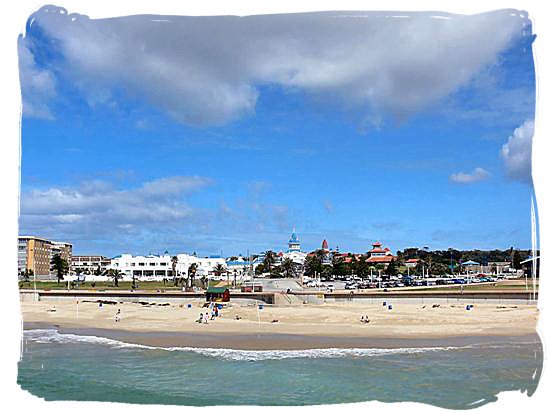
In 1819 the British Government approved the emigration requests of 4000 out of
90000 applicants. On the 17th March 1820, the first British emigrants arrived via Cape Town, to set
foot on South African soil at Algoa Bay, which is present day's Port Elizabeth.
Mfecane means "destroyed in total war" in the Zulu language, while Difaqana
means "forced migration/removal" in the Sotho language. Both terms refer to the same period of
wide-spread war in the early 1800s between the black tribes in Southern Africa, causing widespread
devastation and loss of life.
When Shaka became king of the initially insignificant Zulu tribe, he followed
his unbridled ambition for power and domination by embarking on a strategy of total war against all
the other tribes, leading his Zulus on a path that led to the killing and displacing of hundreds of
thousands of people across the whole of the eastern part of Southern Africa.
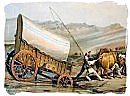
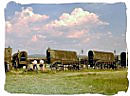
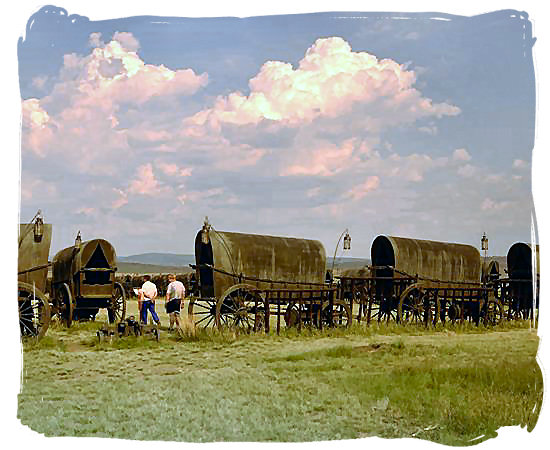
In 1835 a group of pioneers, called "Voortrekkers", decided to break away from
the Cape Colony. They traveled by ox wagon to the interior of the country in a quest for freedom
and independence. They developed their own hybrid language called Afrikaans, which was primarily
based on High Dutch, but also bore elements from the German, Malay, French and black languages.
Over the course of 3 years, 12,000 "Voortrekkers" made this long and arduous journey
to gain independence and to establish their own unique identity as "Afrikaners". As farming was
their occupation, they were soon called "Boere", which means farmers in English, a term which their
descendants still use in reference to themselves.
The most popular destination for the Voortrekkers leaving the Cape was the
Natal region along the eastern coast of South Africa. However, this was Zulu territory and as the
Zulus were one of the most powerful tribes in Africa at the time, this land was not for the
taking.
Piet Retief and his party of 400 Voortrekkers entered into negotiations with
the reigning Zulu king Dingane when they arrived in Natal after their long journey eastwards,
asking the king for land where they could settle themselves.
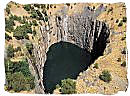
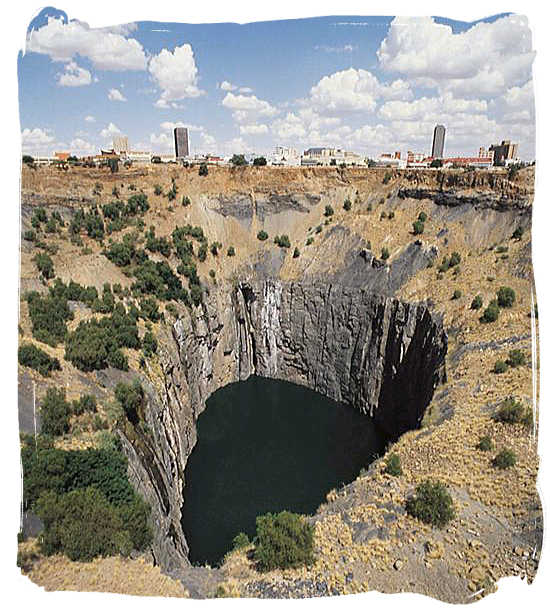
The 19th century discovery of diamonds in South Africa saw an influx of people
from all over the world hoping to lay claim to a piece of this expanding and profitable industry.
The same thing happened when gold was discovered in the Transvaal, specifically at Pilgrims Rest,
Barberton and the Witwatersrand.
New towns sprung up everywhere to accommodate the ever increasing number of
people and the urbanization of South Africa started in earnest. Cecil John Rhodes and Barney
Barnato, both prominent figures on the diamond fields of Kimberley, were also among the first to
stake their claim in the gold mining boom on the Witwatersrand.
In the second half of the 1800's Great Britain was faced with a dilemma. They
lacked sufficient control over their two colonies the Cape and Natal. At the same time they had to
deal with two independent "Boer" republics and a powerful Zulu kingdom which refused to submit to
British rule in Natal.
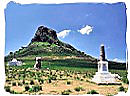
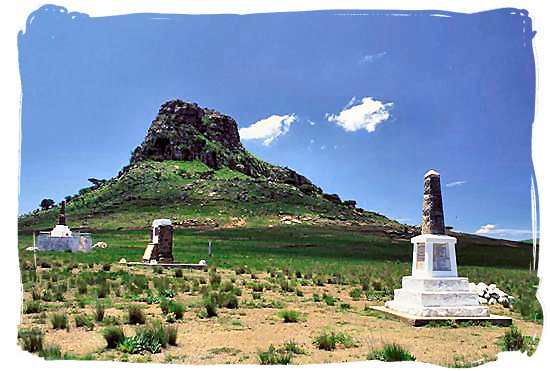
As part of British endeavors to strengthen control and consolidate power, The British
High Commissioner in South Africa demanded from Zulu king Cetshwayo that he should disband and
disarm his Impi's (Zulu regiments). King Cetshwayo had no intention of complying with this
request and so the Anglo/Zulu war became a fact.
When gold and diamonds were discovered in South Africa the British became aware
of the huge potential fortune that lay beyond the borders of their colonies. In 1877, in an effort
to stake their claim, the British annexed the independent republic the "Boers" had founded in
1852.
Its official name was "Zuid Afrikaansche Republiek" which means "South African
Republic" (not to be confused with present day's Republic of South Africa). It was also and probably
better known as the Republic of Transvaal.
The annexation incensed the Boers and resulted in them confirming their
independence from Great Britain on the 16th December 1880. Potchefstroom was the town were the
first shots were fired, marking the start of the first Anglo/Boer war.
The Peace Treaty of Vereeniging in 1902 marked the end of the Anglo/Boer wars
with the British emerging victorious. The black population hoped that the peace treaty would
establish justice and equality for all ethnic groups after years of domination and suppression by
the European population. But this was not to be
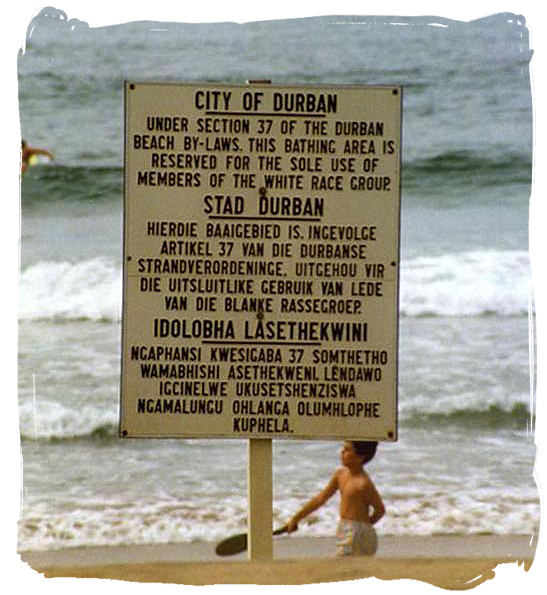
The treaty ignored the black population's right to vote, made no allowance for
any black parliamentary representation and set South Africa onto an ever increasing course of
racial segregation.