 |
||
Our South African barbecue, a way of lifeThe South African barbecue or "braai" has become one of the country’s greatest outdoor eating pleasures, enjoyed by all the cultures in South Africa.
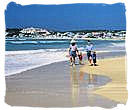
The word "braai", an abbreviation of the word "braaivleis", is the Afrikaans word for barbecue. It has been adopted by English-speaking South Africans. Like the word "barbecue", the word "braai" is a noun and a verb. As a noun, it refers to the grill itself and as a verb you would "braai some steak" or hold a "braai". South Africans won't easily let anything get in the way of a good "braai", not even the weather. Come rain or sunshine ( fortunately it’s mostly sunshine), they just love it. For us a "braai" is much more then justa way of cooking, it has become a way of life. Find out more about one of our greatest outdoor eating pleasures. 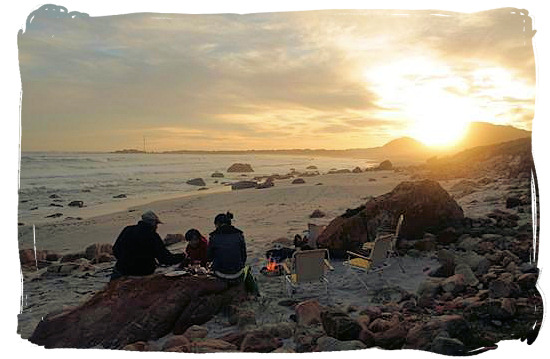 Sunset family "braai" on the beach - South African barbecue tips and ideas A way of life,... It’s rare to see a "braai" with just a few people attending. When there is a "braai", it's a social happening and South Africans, hospitable by nature as they are, are keen to invite anybody and everybody to make it a real occasion. It's difficult to determine how and when the South African barbecue or "braai" culture originated. There wasn't much choice for the Khoi people, the Bantu people and later the Voortrekkers with their nomadic lifestyles but to cook and grill over open fires. 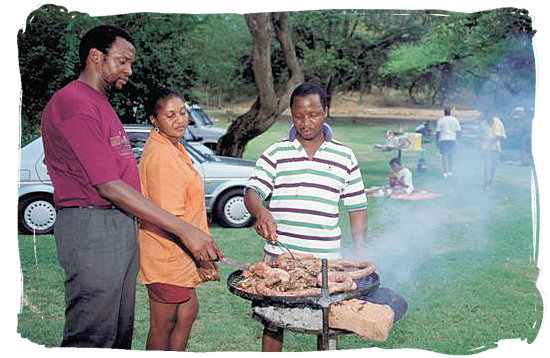 South Africans take their braai very seriously - South African barbecue tips and ideas With time the smoky aroma of sizzling meat cooked over an open fire in South Africa's lovely sunshine weather, has become one of the country's greatest outdoor eating pleasures, enjoyed by all the cultures in South Africa. In the past "braaivleis" (barbecued meat) meant just that, grilled meat served with "mieliepap"(maize meal porridge). Today however it has become part of everybody's lifestyle and also more sophisticated with marinated steaks, lamb and pork chops, spicy "boerewors" (farmers sausage), tasty spareribs, venison and kebabs. Side dishes include "mieliepap", a variety of fresh salads, pot bread, herbed bread, grilled mushrooms and vegetable stir-fries. 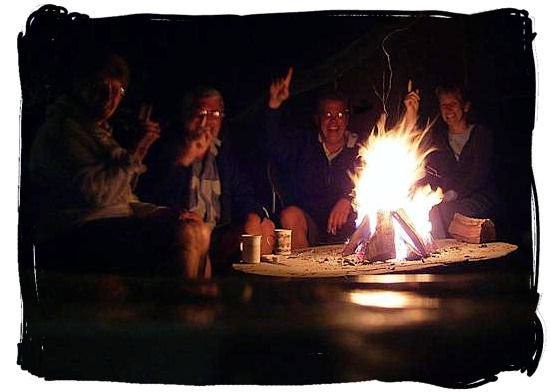 Sitting around the fire after the “braai” - South African barbecue tips and ideas copyright © South-Africa-tours-and-travel.com Make sure that the meat for the "braai" is of good quality, preferably from a youngish well-fed animal. Steaks should be well ripened to ensure tenderness and improved flavour. To prevent curling during cooking, you should remove the outer edges of fat from the chops. Lamb has always been the most popular meat for a "braai" because it’s tender and succulent. Pork has grown in popularity and is very tasty with a barbecue sauce. But the meat most favourite and ubiquitous at every South African barbecue (braai) is of course the country's famous "boerewors" (farmers sausage). A legacy of the early German settlers, it is a must at any "braai". It's quite fat and made of coarsely minced beef and pork, spiced with mainly coriander and often also clover and nutmeg. 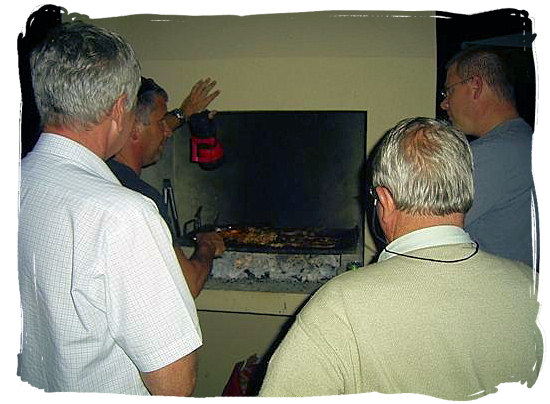 The "braai" is a perfect opportunity for a relaxed social get together - South African barbecue tips and ideas copyright © South-Africa-tours-and-travel.com South Africans take their "braai" very seriously and it has become some kind of an art. The secret is not to be impatient, but to wait until a good bed of coals has formed with no tongues of flame that can singe and spoil the meat. To achieve perfect coals, seasoned experts use their favourite wood such as camel thorn, vine stumps, "rooikrans", myrtle, leadwood and umbrella thorn. Charcoal has the convenience of being widely available while it produces good heat. However once glowing, they should not be disturbed. <<< Top of Page General barbecue (braai) tips,... South Africans regard themselves as seasoned experts when it comes to "braaiing" (barbecuing) and they all seem to have their own ways and methods of producing a nice "braai". Below are a collection of tips and hints to help you enjoy your "braai" the South African barbecue way. 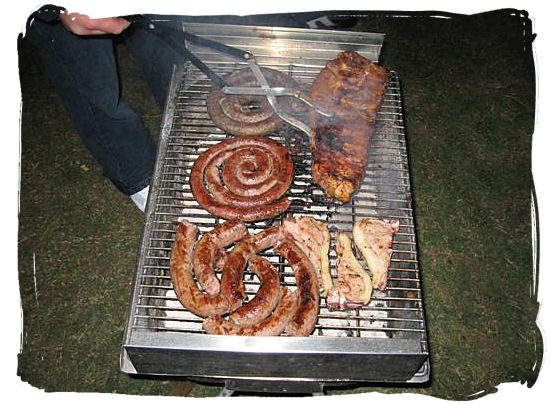 The correct utensils are essential for a successful "braai" - South African barbecue tips and ideas
Tips for using a charcoal fire,... 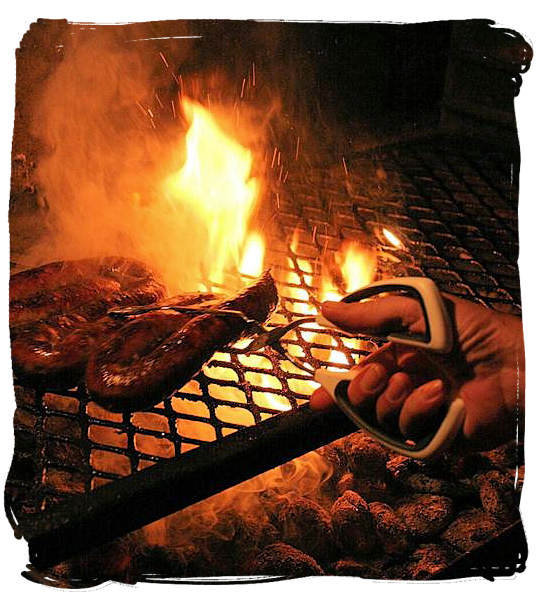 Barbecuing on a charcoal fire - South African barbecue tips and ideas
Tips for using a wood fire,... 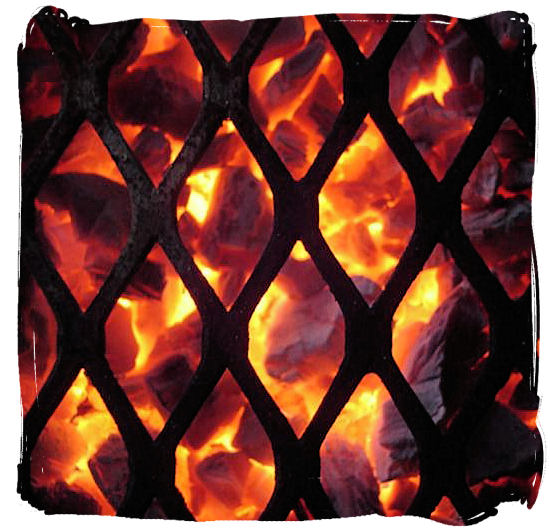 Great coals from a wood fire, just about ready for the "braai" - South African barbecue tips and ideas
Cooking times guideline,... 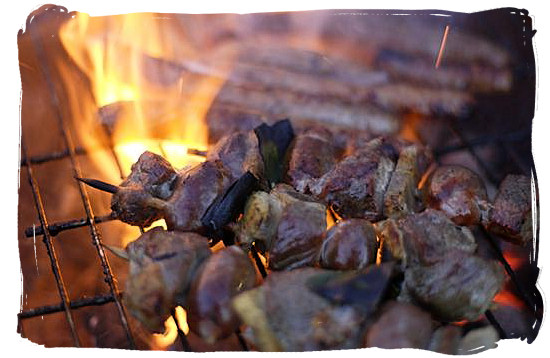 One can almost smell the aroma of these sizzling kebabs - South African barbecue tips and ideas When it comes to cooking on a braai, the simplest method and ingredients often create the best end result. There is nothing more disappointing than over- or underdone meat, so the key is to ensure a delicious outer layer with a juicy inside and depending on your choice either rare, medium or well-done The cooking times below are just a guideline, as it will depend on the thickness of the cut and personal preference. Beef Steak When you have gained a little South African barbecue (braai) experience cooking over coals, a good way to check how well a beef steak is cooked, is with the thumb test, using your own hand as a guide.
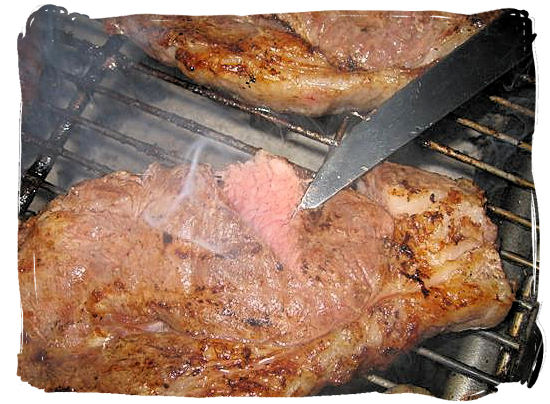 What do you think - medium to rare? - South African barbecue tips and ideas
About 12 to 14 minutes total cooking time, depending on the thickness, turning regularly. Beef Kebabs About 15 to 18 minutes total cooking time, turning regularly. Boerewors About 15 to 20 minutes, turning regularly. 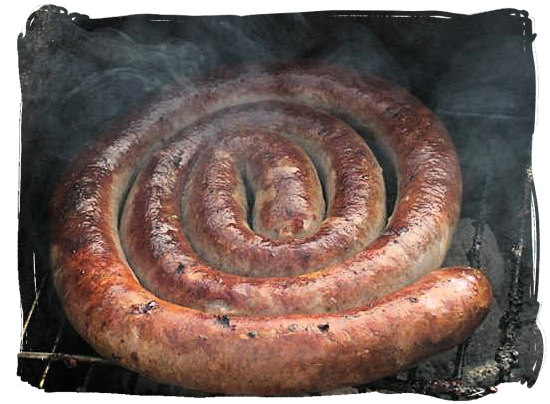 "Boerewors" (farmers sausage), everyone's favourite and a must at every South African "braai" - South African barbecue tips and ideas Lamb Chops About 12 to 14 minutes total cooking time. Lamb Kebabs About 15 minutes total cooking time, turning often. Whole Fish 7 to 9 minutes per 500g (if wrapped in foil, add 20% more cooking time and it's a good idea to remove the fish from the foil and cook over the coals for the last 5 minutes for a smoky flavour). Fish Kebabs About 15 minutes total cooking time, turning regularly. Pork Kebabs About 15 to 20 minutes total cooking time, turning regularly. Pork Spare Ribs About 30 minutes total cooking time, turning regularly. Chicken-breast fillets About 15 minutes total cooking time, turning once. Chicken portions on the bone About 20 minutes total cooking time, turning regularly. 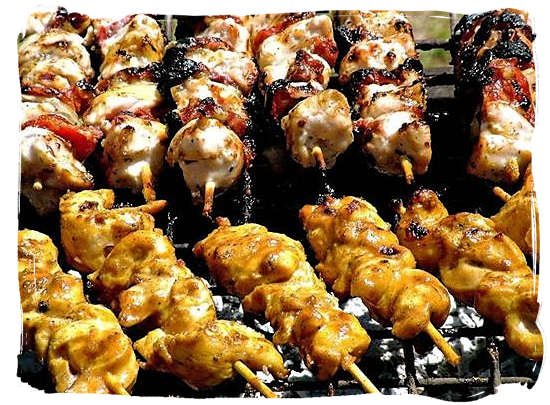 Delicious Sosaties - South African barbecue tips and ideas Bread rolls While it is possible to cook breads and rolls from dough on the braai, it is essential that you do this in a kettle braai or in a container such as a cast-iron container with a lid, which ten acts as an oven. Bread rolls can be cooked directly on the oiled grid, but should not be placed over very hot coals. Rather spread them evenly around the outer edge of the fire. Prepared filled breads can be wrapped in foil and heated on the braai grid. Vegetables On a South African barbecue we prefer to "braai" only firm vegetables such as potatoes, butternut and pumpkin. These can be simply prepared with a knob of butter and seasoning or stuffed to your liking, but they should be well wrapped in foil. Cooking time will vary according to the size of the vegetable, but, generally, allow at least 45 minutes to an hour. Sweet corn is delicious, grilled directly on the grid over the coals and shouldn't take more than 15 minutes, turning regularly. 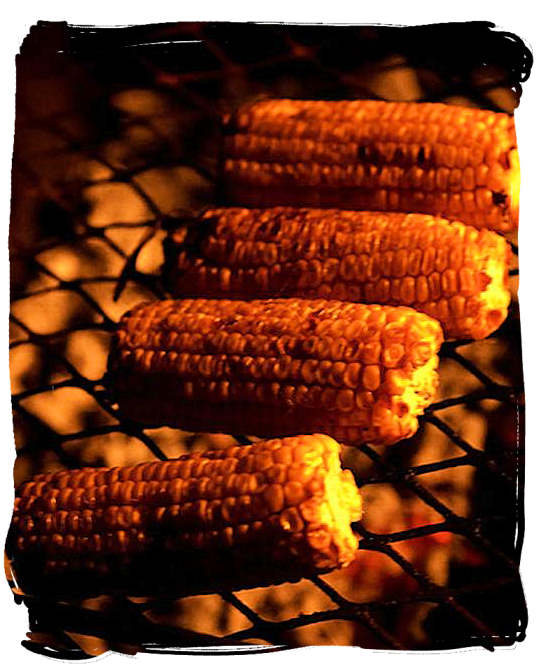 "Mielies (maize cobs) grilled directly on the grill over the coals are a delicacy not to be missed - South African barbecue tips and ideas Top of Page |
    |
|
|
|
||